


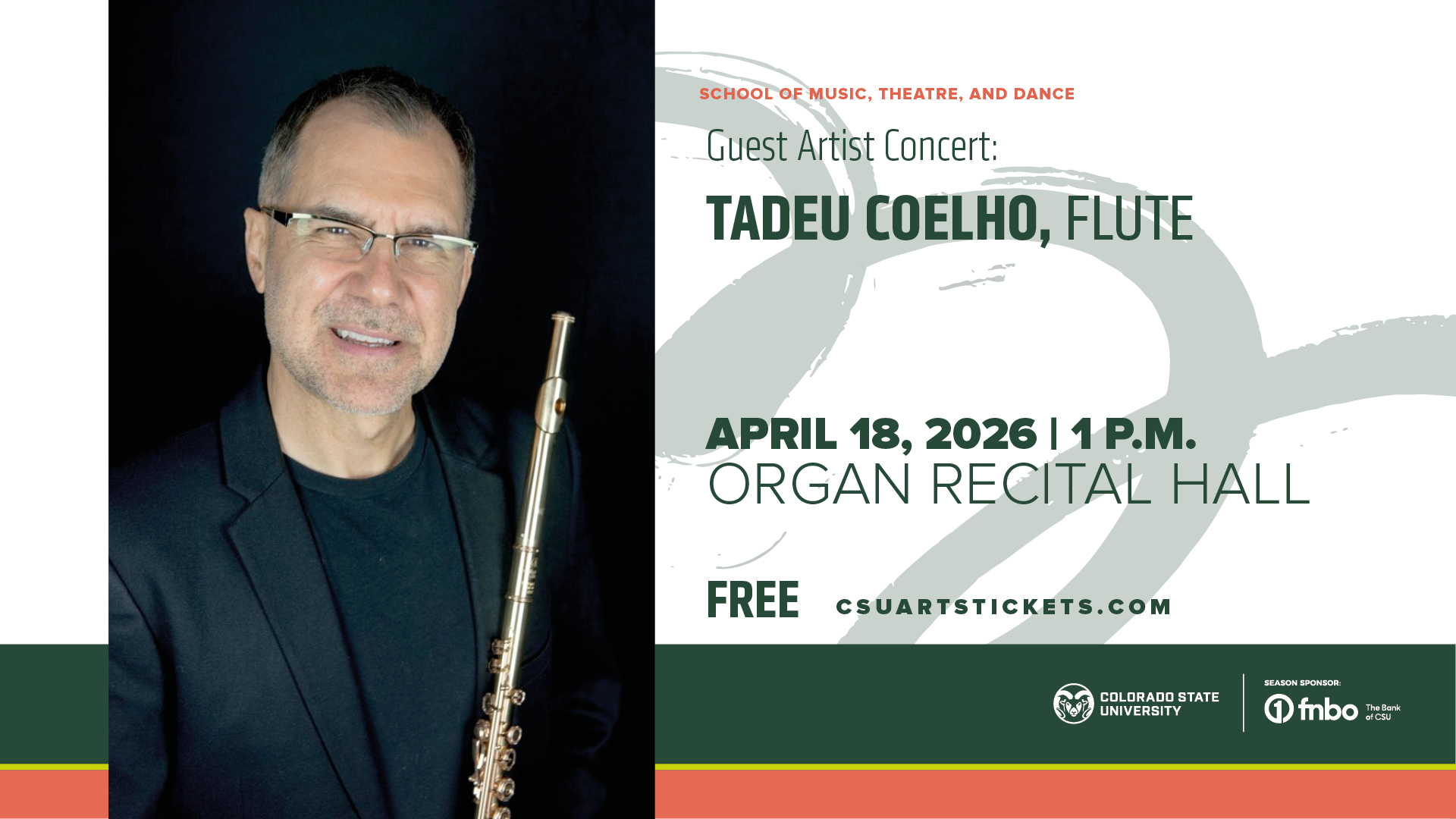
With Juhyun Lee, collaborative piano
The CSU Flute Studio is pleased to welcome internationally renowned flutist and educator Dr. Tadeu Coelho, University of North Carolina School of the Arts. His program traces the flute’s evolution across three centuries, blending Classical refinement, virtuosic solo works, and vibrant contemporary voices from the Americas. The recital features Wolfgang Amadeus Mozart’s Sonata in C major, K. 14, Niccolò Paganini’s Caprice No. 24 in a stunning flute transcription, and Franz Doppler’s Andante and Rondo performed with CSU faculty artist Dr. Ysmael Reyes. The program continues with George Enescu’s Cantabile et Presto and a spirited celebration of Latin American repertoire, including works by Camargo Guarnieri, Osvaldo Lacerda, Eduardo Gamboa, and the Brazilian favorite Brasileirinho arranged by Dr. Coelho.
An avid champion of contemporary music, Dr. Coelho actively commissions, performs, and records works by living composers, enriching the flute repertoire and expanding its expressive possibilities. HIs recordings showcase his remarkable versatility and artistry. Dr. Coelho’s latest album, Latino Voices, features newly commissioned works for flute and voice. Other solo recordings include Live from New Orleans, Azules: Enchanting Music for the Soul (flute and harp), Nocturnes (flute and piano), Modernly Classic, 18th Century Flute Sonatas (with former UNCSA colleague Eric Larsen), Flute Music from Brazil, ¡Rompe!: Mexican Chamber Music, and Life-Drawing (for solo flute). Dr. Coelho has also published the complete works of Pattápio Silva, several works for solo flute, a collection of daily flute exercises with accompanying CDs, and a transcription of Paganini’s Caprice No. 24 for solo flute, bringing the flute part closer to the original violin score. Dr. Coelho’s publications are available at Flute World and from his website. He is a proud Miyazawa artist. For more information, visit www.tadeucoelho.com.
Full Bio:
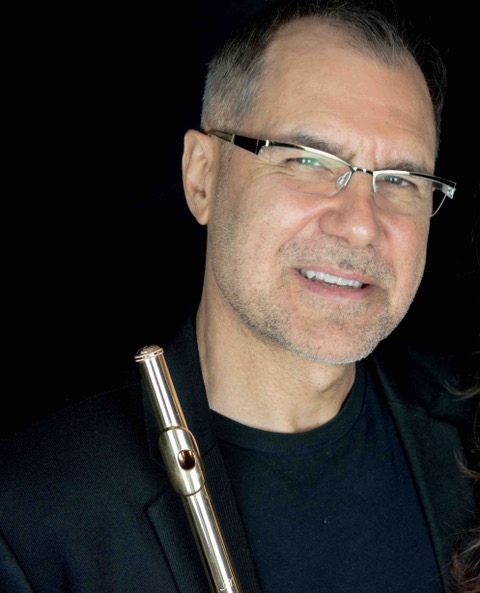 Brazilian-born flutist Tadeu Coelho is Professor of Flute at the University of North Carolina School of the Arts. In 2013–14 he received both the UNCSA Excellence in Teaching Award and the North Carolina Board of Governors Excellence in Teaching Award. He performs regularly as a soloist, chamber musician, and master clinician throughout the Americas, and has held principal positions with the Santa Fe Symphony, the Hofer Symphoniker in Germany, and the Spoleto Festival Orchestra in Italy, among others. He has also appeared as guest flutist with the Boston Symphony Orchestra at Tanglewood.
A passionate advocate for new music, Dr. Coelho has commissioned, premiered, and recorded works by a multitude of composers including Steven Block, João Dias Carrasqueira, Lawrence Dillon, Mark Engebretson, Lawrence Fritts, Eduardo Gamboa, David McHugh, Ronald Roseman, Manuel Gutiérrez-Heras, and Ruth Schonthal among others.
Dr. Coelho’s extensive discography includes Live from New Orleans (Quarteto Vivace Brasil); Azules: Enchanting Music for the Soul (with harpist Karen Thielen); Nocturnes (with pianist Simon Tedeschi); Modernly Classic and 18th Century Flute Sonatas (with pianist Eric Larsen); Flute Music from Brazil; ¡Rompe!: Mexican Chamber Music for Flute; and Life-Drawing: Works for Solo Flute. He is also featured on 3D Classics with music by Thomas Delio, and on Albany Records performing Villa-Lobos with his brother, bassoonist Benjamin Coelho.
In addition to his recordings, Dr. Coelho has published the complete works of Pattápio Silva, as well as several pedagogical collections of daily flute exercises with accompanying tracks. His recent publications include a transcription of Paganini’s Caprice No. 24 for solo flute, with the goal of preserving the integrity of the violin original, and a forthcoming transcription of Bach’s Chaconne.
Tadeu Coelho’s research interests are diverse, with particular focus on Flow theory, Free Improvisation, and electronic music. His work on Flow has yielded significant pedagogical applications, while his explorations in improvisation and technology have broadened performance practices. Dr. Coelho’s passion for performance—whether acoustic, improvised, or technologically mediated—has helped expand contemporary expectations of the artist-virtuoso, redefining the skills and versatility required of 21st-century musicians.
 Dr. Tadeu Coelho is a Miyazawa Artist, and his visit is supported in part by Miyazawa Flutes.